
saddle fitting guide
Saddle Fitting Guide: A Comprehensive Overview
Navigating optimal saddle fit involves understanding horse anatomy‚ rider balance‚ and evolving technologies like Sedelogic’s S-Curve‚ alongside Hartpury University’s rider-focused guidelines.
Understanding the Importance of Saddle Fit
Proper saddle fit is paramount for equine welfare and performance‚ directly impacting a horse’s comfort‚ movement‚ and long-term health. A poorly fitting saddle can cause significant pain‚ leading to behavioral changes and even physical damage like kissing spines‚ as addressed by veterinarian-developed solutions like Sedelogic.
Beyond comfort‚ a well-fitted saddle allows the horse to work freely and efficiently‚ benefiting both horse and rider. Current research‚ spearheaded by Hartpury University‚ emphasizes the crucial link between saddle fit and rider biomechanics‚ aiming to establish industry-wide guidelines for optimal pairings.
Horse Anatomy and Saddle Fit Considerations
Understanding equine anatomy is fundamental to achieving a correct saddle fit. Key areas include the withers‚ which require sufficient clearance to prevent pressure‚ and the shoulder blades‚ demanding freedom of movement. Asymmetrical horses or those with uneven withers present unique challenges‚ necessitating specialized saddle adjustments or designs.
Furthermore‚ a horse’s muscle development and conformation significantly influence saddle fit. Changes in weight or muscle mass require regular saddle checks and potential adjustments to maintain optimal comfort and performance‚ ensuring the saddle doesn’t impede natural biomechanics.
Types of Saddles and Their Fit Requirements
Different disciplines demand distinct saddle designs‚ each with unique fitting considerations. English saddles – jump‚ dressage‚ and all-purpose – vary in tree shape and panel configuration to accommodate rider position and horse movement. Western saddles‚ including roping‚ trail‚ and pleasure models‚ require a wider gullet and different panel angles.
Proper fit hinges on matching the saddle’s design to the horse’s conformation and the rider’s discipline‚ ensuring optimal weight distribution and freedom of movement for both horse and rider.
English Saddles: Jump‚ Dressage‚ and All-Purpose
English saddle fit is highly specialized. Jump saddles prioritize freedom of shoulder movement and a forward flap for secure contact over fences. Dressage saddles emphasize a deep seat and straight panels to encourage collection and precise aids. All-purpose saddles offer a compromise‚ suitable for varied activities.
Each style requires careful attention to gullet width‚ panel shape‚ and tree angle to ensure proper clearance over the withers and balanced contact.
Western Saddles: Roping‚ Trail‚ and Pleasure
Western saddle fit differs significantly from English disciplines. Roping saddles feature a sturdy horn and a secure seat for controlling livestock‚ demanding a stable‚ well-fitted tree. Trail saddles prioritize rider comfort over long distances‚ needing balanced panel contact. Pleasure saddles offer a more streamlined profile.
Proper fit involves ensuring adequate gullet clearance and even weight distribution across the horse’s back‚ crucial for preventing soreness.
The Saddle Fitting Process: A Step-by-Step Guide
A thorough fitting begins with a comprehensive horse assessment‚ evaluating conformation and movement for any asymmetries. Selecting the correct saddle pad is vital‚ as its thickness and shape impact overall fit. Initial checks involve assessing gullet clearance and panel contact.
Professionals utilize tools like gullet gauges and may employ pressure mapping technology to pinpoint areas of stress.
Initial Horse Assessment: Conformation and Movement
Begin by observing the horse’s static conformation‚ noting any deviations in back shape or muscle development. Evaluate movement at walk‚ trot‚ and canter‚ looking for asymmetry or limitations. A saddle fitter will assess withers height‚ shoulder slope‚ and spinal curvature.
Identifying conformational flaws informs saddle selection‚ ensuring proper weight distribution and preventing discomfort during ridden work.
Saddle Pad Selection and Its Impact on Fit
Saddle pads significantly influence how a saddle sits on the horse’s back‚ acting as a crucial interface. Thickness‚ material‚ and shape all affect pressure distribution and stability.
Choosing the correct pad can compensate for minor conformational differences or provide extra cushioning where needed. Incorrect pads can create pressure points or cause slippage‚ compromising fit and comfort. Consider the horse’s workload and discipline when selecting a pad.
Key Areas to Check for Proper Saddle Fit
Assessing saddle fit requires meticulous attention to detail‚ focusing on crucial contact points. The gullet’s clearance over the withers is paramount‚ ensuring freedom of movement. Equally important is evaluating panel contact – it should be even and symmetrical along the horse’s back.
Look for consistent pressure distribution; gaps or excessive pressure indicate a misfit. Regularly checking these areas helps maintain comfort and prevent potential issues.
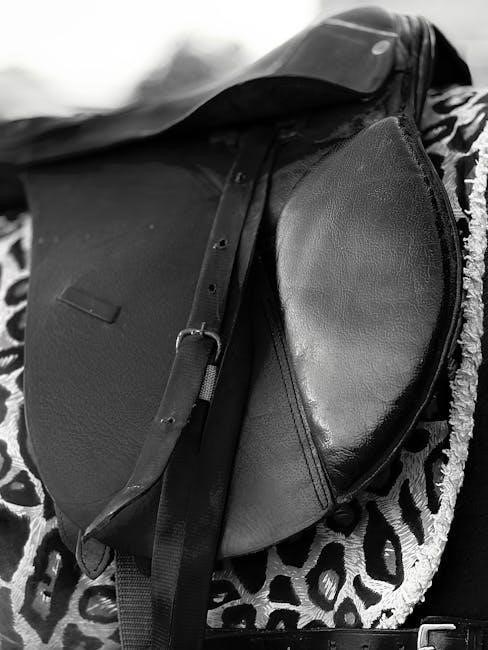
The Gullet and Withers Clearance
Proper gullet width is vital for withers clearance‚ preventing painful pressure. The gullet channel must allow ample space‚ avoiding contact with the spinal process. A correctly fitted saddle allows unrestricted shoulder movement‚ crucial for athletic performance and comfort.
Insufficient clearance restricts the horse‚ potentially causing soreness and behavioral changes. Utilizing a gullet gauge helps determine appropriate width‚ ensuring optimal fit and well-being.
Panel Contact and Symmetry
Even panel contact distributes rider weight effectively‚ minimizing pressure points. Symmetry is key; unequal contact indicates an imbalance‚ potentially stemming from horse conformation or rider asymmetry.
Pressure mapping technology reveals contact patterns‚ identifying areas needing adjustment. Properly fitted panels conform to the horse’s musculature‚ allowing free movement and preventing soreness. Consistent checks are crucial‚ as muscle development impacts panel contact over time.
Recognizing Signs of a Poorly Fitting Saddle
Subtle changes can signal saddle fit issues. Behavioral shifts‚ like reluctance to work or bucking‚ are red flags. Physical indicators include persistent sore spots‚ often under the saddle panel edges‚ and noticeable muscle asymmetry along the horse’s back.
White hairs or rub marks also suggest friction. Addressing these signs promptly prevents chronic pain and performance limitations‚ ensuring equine welfare and optimal athletic function.
Behavioral Changes in the Horse
A poorly fitting saddle often manifests as altered behavior. Horses may exhibit reluctance to start work‚ resistance under saddle‚ or even bucking. Sensitivity to grooming along the back‚ particularly around the withers‚ is a key indicator. Changes in temperament‚ such as increased irritability or a generally unhappy demeanor‚ should prompt investigation.
These behaviors aren’t necessarily disobedience‚ but rather a horse’s way of communicating discomfort and pain.
Physical Indicators: Sore Spots and Muscle Asymmetry
Visible signs of a poor fit include sore spots or rubs appearing on the horse’s back‚ often under the saddle panels. Muscle asymmetry‚ where one side is more developed than the other‚ is a common consequence of uneven pressure. Look for changes in the topline‚ with hollowing or dipping along the spine.
Persistent white hairs in areas of pressure can also signal a problem.
Tools Used in Saddle Fitting
Accurate saddle fitting relies on specialized tools to assess both the horse and the saddle. A gullet gauge measures the width of the gullet‚ ensuring adequate clearance over the withers. An angle finder helps determine the angle of the horse’s shoulder.
Increasingly‚ pressure mapping technology provides visual data of panel contact‚ revealing areas of high or low pressure.

Gullet Gauge and Angle Finder
The gullet gauge is essential for measuring the internal width of the saddle’s gullet‚ directly impacting withers clearance and preventing pressure points. An angle finder assesses the angle of the horse’s shoulder‚ crucial for ensuring the saddle’s tree aligns correctly with the horse’s conformation.
These tools provide objective measurements‚ aiding fitters in selecting or adjusting saddles for optimal comfort and performance.
Pressure Mapping Technology
Advanced pressure mapping systems utilize sensors placed under the saddle pad to visualize pressure distribution across the horse’s back. This technology reveals areas of excessive or insufficient pressure‚ identifying potential discomfort or restrictions in movement.
These systems offer a dynamic assessment‚ showing how pressure changes with rider weight and movement‚ improving saddle fit accuracy and horse welfare.
Addressing Common Saddle Fitting Problems
Challenges like uneven withers or asymmetrical builds require specialized saddle fitting solutions. Horses with limited shoulder movement often benefit from saddles with wider gullets and panels designed to accommodate their conformation.
Careful evaluation and adjustments‚ potentially involving a professional fitter‚ are crucial to ensure optimal comfort and performance‚ preventing pressure points and muscle strain.
Uneven Withers and Asymmetrical Horses
Addressing uneven withers demands saddles with specialized panel designs‚ often featuring flocking that can be customized to lift and support where needed. Asymmetrical horses require careful consideration of panel shape and balance to distribute weight evenly.
A skilled saddle fitter will assess the horse’s conformation and adjust the saddle to minimize pressure points and maintain optimal contact‚ ensuring comfort and unrestricted movement.
Horses with Limited Shoulder Movement
Saddles for horses with restricted shoulder movement necessitate a wider gullet and panels designed to clear the scapula‚ preventing impingement and allowing a full range of motion. Proper fit is crucial to avoid discomfort and potential performance limitations.
A fitter will evaluate the horse’s gait and shoulder articulation‚ selecting or modifying a saddle to accommodate their unique biomechanics‚ promoting unrestricted forward movement.
The Role of a Professional Saddle Fitter
A qualified saddle fitter possesses extensive knowledge of equine anatomy‚ saddle construction‚ and biomechanics‚ ensuring optimal horse and rider harmony. Look for experience and credentials‚ as proper fitting significantly impacts equine welfare and performance.
During a consultation‚ expect a thorough assessment of your horse’s conformation‚ movement‚ and your riding style‚ leading to tailored saddle recommendations and adjustments for a secure‚ comfortable fit.
Qualifications and Experience to Look For
Seek a fitter with demonstrable expertise in saddle fitting‚ ideally through recognized associations and ongoing education. Experience assessing diverse horse conformations and rider types is crucial for accurate evaluations.
A skilled fitter understands biomechanics and can identify subtle indicators of poor fit‚ offering informed recommendations. Prioritize fitters who prioritize the horse’s well-being and provide transparent‚ detailed explanations of their findings and proposed solutions.
What to Expect During a Fitting Consultation
A thorough consultation begins with observing your horse’s conformation and movement‚ both at rest and under saddle. The fitter will assess the horse’s back‚ shoulders‚ and musculature‚ considering any existing asymmetries or limitations.
Expect a detailed evaluation of your current saddle’s fit‚ including gullet width‚ panel contact‚ and overall balance. The fitter should explain their findings clearly and discuss potential adjustments or alternative saddle options tailored to both horse and rider.
Saddle Fit and Rider Balance
Rider position profoundly impacts saddle fit; an unbalanced rider can create uneven pressure points‚ compromising both horse and rider comfort. Adjustments to saddle fit may be necessary to accommodate different rider builds and skill levels‚ ensuring optimal biomechanics.
A well-fitted saddle facilitates a secure and balanced seat‚ allowing the rider to move harmoniously with the horse. Recognizing how rider posture influences saddle stability is crucial for achieving a synergistic partnership.
How Rider Position Affects Saddle Fit
An unbalanced rider‚ tilting forward or backward‚ shifts weight distribution‚ creating asymmetrical pressure on the horse’s back and potentially destabilizing the saddle. This can lead to uneven panel contact and discomfort for the horse.
A rider who sits crookedly or grips with their legs can also disrupt saddle balance. Correct rider posture—a neutral spine and relaxed hips—allows for even weight distribution‚ maximizing saddle stability and promoting optimal equine biomechanics.
Adjustments for Different Rider Types
Rider physique significantly impacts saddle fit; taller riders often require wider gullets and longer flaps‚ while those with shorter legs may need narrower twists. Adjustments like changing the tree width or utilizing different panel shapes can accommodate varying rider builds.
Experienced saddle fitters consider rider balance and position when making adjustments‚ ensuring the saddle doesn’t impede the rider’s ability to maintain a correct‚ effective seat. This personalized approach optimizes both horse and rider comfort.
Saddle Fit for Different Horse Disciplines

Discipline-specific demands necessitate tailored saddle fits. Jumping saddles prioritize freedom of shoulder movement and a secure seat for the rider over fences‚ often featuring a flatter tree. Dressage saddles emphasize close contact and a balanced position‚ typically with a more curved tree.
Western saddles vary greatly; roping saddles require substantial horn support‚ while trail saddles prioritize comfort for long rides‚ demanding careful panel fitting for diverse terrains.
Specific Considerations for Jumping Saddles
Jumping saddles require exceptional freedom of the horse’s shoulder‚ demanding a gullet width allowing ample clearance. Panel contact must be even to avoid interference during dynamic movements over fences. A flatter tree promotes a balanced rider position‚ crucial for maintaining control.
Consider the rider’s experience level; a forward flap aids security‚ while a more open seat encourages independent seat and leg aids. Proper balance is paramount.
Specific Considerations for Dressage Saddles
Dressage saddles prioritize a deep seat and a longer flap to facilitate a correct‚ balanced rider position‚ encouraging subtle communication with the horse. The tree shape should support the rider’s posture without restricting the horse’s movement‚ allowing for collection and extension.
Panel contact is vital for even weight distribution‚ promoting suppleness and engagement. A well-fitted dressage saddle enhances both horse and rider performance.
Ongoing Saddle Fit Maintenance
Consistent saddle fit checks are crucial as a horse’s weight and muscle development change over time‚ impacting panel contact and overall saddle stability. Regular evaluations‚ ideally every six to twelve months‚ ensure continued comfort and prevent pressure points.
Adjustments by a qualified fitter address these shifts‚ maintaining optimal performance and well-being for both horse and rider‚ preventing potential issues.
Regular Checks and Adjustments
Routine saddle checks‚ performed every six to twelve months‚ are vital for maintaining optimal fit as the horse’s physique evolves. These assessments should include evaluating panel contact‚ gullet width‚ and overall saddle stability.
Adjustments‚ made by a qualified fitter‚ address changes in muscle mass or weight‚ preventing pressure sores and ensuring continued comfort and performance for the equine athlete.
Impact of Horse’s Weight and Muscle Development
A horse’s fluctuating weight and muscle development significantly impact saddle fit‚ necessitating periodic re-evaluation. Weight gain or loss alters the contours of the back‚ potentially causing pressure points or reduced contact.
Similarly‚ muscle growth – from training or conditioning – changes the shape under the saddle‚ demanding adjustments to maintain proper support and prevent discomfort. Regular monitoring is crucial.
New Research in Saddle Fit Technology
Recent advancements are revolutionizing saddle fit‚ moving beyond traditional methods. Hartpury University is pioneering rider-focused guidelines‚ aiming to establish industry-wide standards for improved horse welfare and rider performance.
Simultaneously‚ Sedelogic’s S-Curve technology offers a clinically proven solution for horses suffering from kissing spines and chronic back issues‚ demonstrating a commitment to innovative equine comfort and biomechanics.
Hartpury University’s Rider-Focused Guidelines
A groundbreaking study led by Hartpury University seeks to redefine saddle fit assessment. This ambitious research focuses on creating comprehensive guidelines that prioritize the rider’s influence on saddle performance and horse biomechanics.
The initiative aims to supplement existing saddle fit knowledge‚ benefiting both horse welfare and rider training‚ ultimately leading to a more harmonious partnership and improved athletic potential.
Sedelogic S-Curve Technology for Back Issues
Developed by veterinarians‚ Sedelogic’s S-Curve technology offers a clinically proven solution for horses suffering from kissing spines and chronic back pain. This innovative approach addresses biomechanical imbalances often exacerbated by ill-fitting saddles.
The technology aims to alleviate pressure points and promote healthy spinal movement‚ providing targeted support and enhancing comfort for horses with pre-existing back conditions‚ improving overall wellbeing.
Resources for Saddle Fit Information
Accessing reliable saddle fit guidance is crucial for horse and rider wellbeing. Professional saddle fitting associations provide qualified fitters and educational resources.
Numerous online guides and forums offer valuable insights‚ though verifying information sources is essential. Staying informed about advancements‚ like those from Hartpury University‚ ensures best practices. Consulting experienced professionals remains paramount for personalized assessments and adjustments‚ guaranteeing optimal saddle fit.
Professional Saddle Fitting Associations
Seeking qualified assistance is vital for proper saddle fit. Reputable associations offer certification programs‚ ensuring fitters possess the necessary knowledge and skills.
These organizations often maintain directories of certified professionals‚ simplifying the search process. Association membership typically requires ongoing education‚ keeping fitters abreast of the latest research and technologies‚ such as Sedelogic’s innovations. Utilizing these resources guarantees a thorough and informed saddle fitting experience.
Online Saddle Fit Guides and Forums
Numerous online resources supplement professional saddle fitting services‚ offering valuable information and community support. Websites provide introductory guides to saddle fit principles‚ covering topics like conformation assessment and pressure point identification.
Forums allow horse owners to connect‚ share experiences‚ and seek advice from peers and sometimes‚ certified fitters. However‚ online information should complement‚ not replace‚ a professional assessment‚ especially considering advancements like Hartpury University’s guidelines.