
it band exercises pdf
Numerous PDF resources detail effective IT band exercises, offering illustrated guides for stretches and strengthening routines to combat iliotibial band syndrome and knee discomfort.
What is the IT Band?
The iliotibial (IT) band is a thick, fibrous band of tissue running along the outside of the thigh, extending from the hip to just below the knee. It’s crucial for stabilizing the knee during running and other activities. PDF guides often begin by explaining this anatomy, emphasizing its role in movement and potential for discomfort.
Understanding its function is key to performing exercises correctly, as detailed in many downloadable resources. These guides highlight that the IT band itself doesn’t shorten, but tension can develop in surrounding muscles – glutes, hip flexors, and hamstrings – leading to IT band syndrome. Therefore, exercises focus on releasing tension in these areas, as illustrated within the PDF instructions.
Understanding IT Band Syndrome (ITBS)
IT Band Syndrome (ITBS) arises from friction between the IT band and the outer knee, causing pain, particularly during running. PDF resources dedicated to IT band exercises frequently detail the causes and symptoms of ITBS, emphasizing that it’s often linked to biomechanical issues and overuse.
These guides explain that while the IT band isn’t the primary problem, tightness in surrounding muscles contributes to the friction. Consequently, the exercises within these PDFs target these muscles – glutes, hip flexors, and hamstrings – to alleviate pressure. Many downloadable resources also stress the importance of proper form and gradual progression to avoid exacerbating the condition, offering detailed illustrations for each exercise.

Stretches for IT Band Relief
PDF guides showcase stretches like standing and side-leaning variations, utilizing a towel or band for supine stretches to target IT band tension effectively.
Standing IT Band Stretch
PDF resources consistently demonstrate the standing IT band stretch as a foundational exercise for relief. To perform it, stand with the affected side facing away from a wall or stable support. Cross the affected leg behind the other, and then lean towards the support, feeling a stretch along the outside of your thigh.
Maintain a straight back and avoid bending at the waist. Hold the stretch for 20-30 seconds, repeating three times. Many guides emphasize proper form to maximize effectiveness and prevent injury. Illustrations within these PDFs clearly depict the correct body alignment. This stretch targets the IT band directly, alleviating tension and improving flexibility. Some variations suggest a slight bend in the supporting leg for added comfort.
Side-Leaning IT Band Stretch
PDF guides frequently feature the side-leaning IT band stretch, highlighting its simplicity and effectiveness. Begin by standing with feet hip-width apart. Cross one leg behind the other, then lean sideways away from the leg that’s crossed. You should feel a stretch along the outer thigh of the crossed leg.
Illustrated instructions in these resources emphasize keeping your back straight and core engaged. Hold the stretch for 20-30 seconds, repeating three times on each side. Some PDFs suggest reaching overhead with the arm on the same side as the stretched leg to deepen the stretch. Proper form, as depicted in the guides, is crucial to avoid strain and maximize benefits. This stretch effectively targets the IT band, promoting flexibility and reducing tightness.
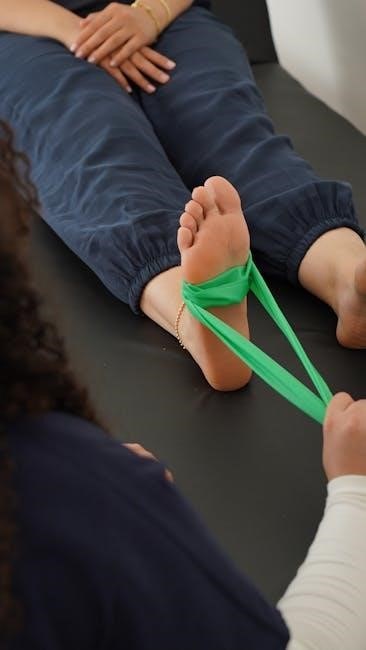
Supine IT Band Stretch with Towel/Band
Many IT band exercise PDFs demonstrate the supine stretch utilizing a towel or resistance band. Lie on your back with legs extended. Loop the towel or band around the foot of the affected leg. Gently pull the leg across your body, keeping your shoulder flat on the floor.
PDF illustrations emphasize maintaining a straight leg and avoiding twisting at the hip; Hold this position for approximately one minute, repeating the stretch three times. The guides often advise feeling a stretch along the outer thigh. This stretch is beneficial for releasing tension in the IT band and improving flexibility. Proper technique, as shown in the PDFs, is vital to prevent injury and achieve optimal results.
Kneeling Hip Flexor Stretch
IT band exercise PDFs frequently include the kneeling hip flexor stretch, crucial for addressing imbalances contributing to ITBS. Begin by kneeling on one knee, with the other foot flat on the floor in front of you. Ensure the front knee is directly above the ankle. Gently push your hips forward, maintaining a straight back and engaged core.
PDF guides highlight the importance of feeling the stretch in the front of the hip of the kneeling leg. Hold this position for 20-30 seconds, repeating three times. Some PDFs suggest reaching the arm on the same side as the kneeling leg back for a deeper stretch. This exercise helps release tension in the hip flexors, which can indirectly impact IT band tightness.
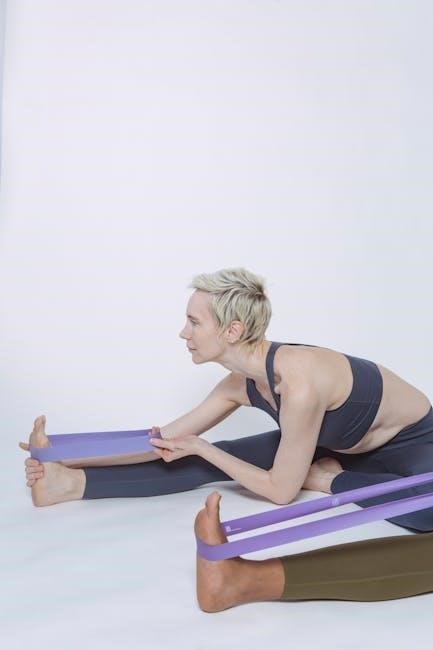
Strengthening Exercises for IT Band Support
PDF guides emphasize strengthening exercises like clam shells, leg lifts, and squats to bolster the muscles supporting the IT band and improve stability.
Clam Exercise
PDF resources consistently feature the clam exercise as a foundational strengthening movement for IT band support. To perform this, lie on your side with knees bent and stacked, feet together. Keeping your feet connected, slowly lift your top knee while maintaining a neutral spine and avoiding pelvic rotation.
This action engages the gluteus medius, a key muscle in stabilizing the hip and preventing excessive IT band tension. Many guides suggest performing 3 sets of 15-20 repetitions. Proper form is crucial; focus on controlled movement rather than speed. Some PDFs recommend adding a resistance band around the thighs for increased challenge as strength improves. This exercise is often recommended by physiotherapists as part of a comprehensive IT band rehabilitation program.
Side-Lying Leg Lifts
Many IT band exercise PDFs detail side-lying leg lifts as a vital strengthening component. Lie on your side with legs extended, keeping your body in a straight line. Slowly lift your top leg towards the ceiling, maintaining a controlled motion and avoiding rotation of your hip.
Focus on engaging your hip abductors – the muscles responsible for lifting the leg away from the body. Lower the leg slowly back to the starting position. PDF guides often recommend 3 sets of 15-20 repetitions per leg. Adding an ankle weight or resistance band above the knees can increase the exercise’s intensity. This exercise helps strengthen the muscles that support the hip and stabilize the IT band, reducing strain.
Wall Squats
IT band exercise PDFs frequently include wall squats as a foundational strengthening exercise. Stand with your back flat against a wall, feet shoulder-width apart, and slightly forward. Slowly slide down the wall, bending your knees to approximately a 45-90 degree angle, ensuring your knees track over your ankles.

Maintain a straight back and engaged core throughout the movement. Hold the squat position for a few seconds, then slowly slide back up to the starting position. PDF guides often suggest 3 sets of 10-15 repetitions. This exercise strengthens the quadriceps, glutes, and hamstrings, providing crucial support for the IT band and improving overall knee stability.
Single Leg Deadlifts
Many IT band exercise PDFs incorporate single leg deadlifts to enhance glute and hamstring strength, vital for IT band stability. Begin standing with feet hip-width apart, holding a light weight (optional). Hinge at the hips, extending one leg straight back while keeping your back flat and core engaged.
Lower the weight towards the ground, maintaining a slight bend in the standing knee. Focus on feeling the stretch in your hamstring. Return to the starting position, squeezing your glutes. PDF guides typically recommend 3 sets of 8-12 repetitions per leg. Proper form is crucial to avoid injury and maximize effectiveness.
Advanced IT Band Exercises
PDF guides often present glute bridges, hip abduction with resistance bands, and lateral band walks for progressed IT band support and strength gains.
Glute Bridges
Glute bridges are frequently detailed within IT band exercise PDF resources as a crucial component of rehabilitation and preventative care. These exercises effectively target the gluteal muscles, which play a vital role in stabilizing the pelvis and controlling lower limb movement, directly impacting IT band function.
PDF guides typically illustrate performing glute bridges by lying on your back with knees bent and feet flat on the floor. The focus is on squeezing the glutes and lifting the hips off the ground, maintaining a straight line from shoulders to knees.
Many resources emphasize controlled movements and proper form to maximize effectiveness and prevent further injury. Variations, like single-leg glute bridges, are often included for increased challenge and targeted muscle activation, as found in comprehensive PDF guides.
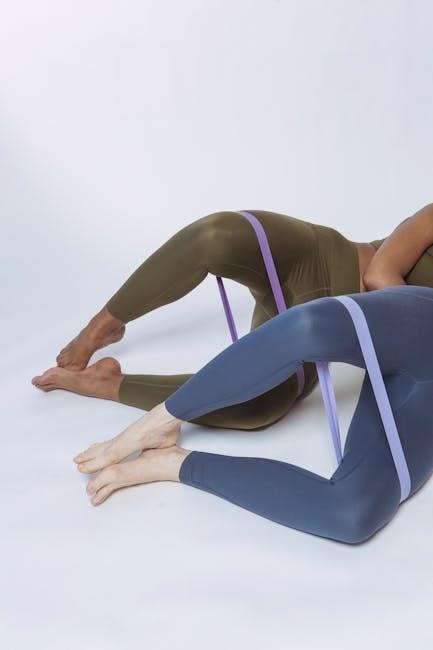
Hip Abduction with Resistance Band
IT band exercise PDF guides consistently feature hip abduction with a resistance band as a key strengthening exercise. This movement directly addresses weaknesses in the hip abductors – muscles crucial for stabilizing the pelvis during single-leg activities, a common trigger for IT band syndrome.
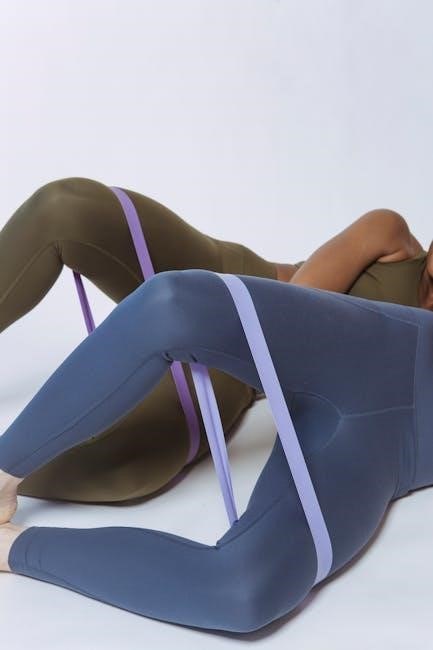
Illustrated instructions within these PDFs typically demonstrate looping a resistance band around the ankles or just above the knees. Maintaining a slight bend in the knees, the exercise involves slowly moving one leg outwards against the band’s resistance, keeping the body stable.
PDFs often highlight the importance of controlled movements and avoiding compensation, ensuring the gluteus medius is actively engaged. Progressive resistance, using bands of varying strength, is frequently recommended for continued improvement.
Lateral Band Walks
Many IT band exercise PDF resources showcase lateral band walks as a fundamental strengthening component. These guides emphasize the exercise’s effectiveness in activating the gluteus medius and tensor fasciae latae (TFL), muscles vital for hip and pelvic stability, directly impacting IT band function.
PDF illustrations typically depict placing a resistance band around the ankles or just above the knees. Maintaining a slightly bent knee position and a controlled stance, the exercise involves taking small, deliberate steps sideways, keeping tension on the band.
These guides often stress maintaining proper form – a slight squat position and keeping the band taut throughout the movement – to maximize gluteal engagement and prevent compensation. Progressive resistance is also commonly advised.
IT Band Exercise PDF Resources
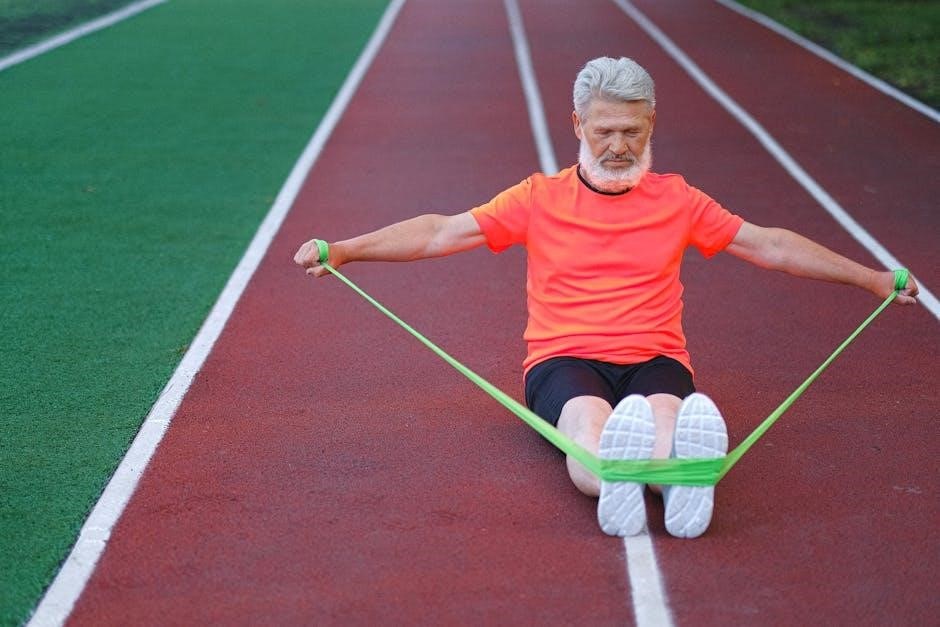
Accessible PDF guides provide detailed instructions and illustrations for IT band stretches and strengthening exercises, aiding in the rehabilitation of IT band syndrome.
Finding Reliable PDF Guides
Locating trustworthy PDF resources for IT band exercises requires careful consideration. Begin by searching websites of reputable physiotherapy clinics, like Yorkville Sports Medicine Clinic, often providing downloadable guides. Look for PDFs created by qualified physical therapists or sports medicine professionals; their credentials should be clearly stated.
Prioritize resources from established medical institutions or organizations dedicated to sports injury prevention and rehabilitation. Be cautious of generic PDFs lacking author information or appearing on unverified websites. Cross-reference information with multiple sources to ensure accuracy and consistency.
Ensure the PDF includes clear illustrations or videos demonstrating proper exercise form, minimizing the risk of injury. A well-structured guide will detail exercise progressions and modifications for varying fitness levels.
What to Look for in a PDF Guide
A comprehensive IT band exercise PDF should detail stretches like standing and side-leaning variations, alongside strengthening exercises such as wall squats, clam exercises, and side-lying leg lifts. Instructions must be exceptionally clear, emphasizing proper form to avoid exacerbating symptoms. Look for guides illustrating how to use a towel or resistance band for assisted stretches, enhancing effectiveness.
The PDF should explain the rationale behind each exercise, connecting it to IT band syndrome relief and knee pain alleviation. It’s crucial to find a guide that addresses knee stabilization and hip flexor stretches, recognizing their impact on IT band function.
Finally, a quality guide will offer guidance on exercise frequency, sets, and repetitions, tailored to individual needs and recovery stages.

The Role of Physiotherapy
Physiotherapists expertly prescribe tailored treatments—including stretches, exercises, massage, and dry needling—to effectively rehabilitate IT band syndrome and alleviate associated pain.
Physiotherapist-Prescribed Treatments
A skilled physiotherapist plays a crucial role in IT band syndrome rehabilitation, moving beyond generic PDF exercise guides to provide personalized care. Initial assessment identifies specific biomechanical issues contributing to the pain. Treatments commonly include targeted stretching routines – like the standing and side-leaning variations – to improve flexibility. Strengthening exercises, such as clam exercises and side-lying leg lifts, are prescribed to support the hip and knee.
Furthermore, manual therapies like massage and dry needling address muscle tightness and trigger points. A comprehensive plan considers individual needs, activity levels, and goals, ensuring a safe and effective recovery. The physiotherapist will monitor progress, adjusting the program as needed, and providing education on preventative measures to avoid recurrence. They’ll also guide proper form during exercises, maximizing benefits and minimizing risk.
Dry Needling and Massage for ITBS
While PDF guides offer exercise routines, dry needling and massage, administered by a qualified professional, provide targeted relief for IT band syndrome. Dry needling involves inserting thin needles into trigger points within the IT band and surrounding muscles – glutes, quads, and hamstrings – to release tension and restore normal function. This differs from acupuncture, focusing on musculoskeletal issues.
Massage therapy, particularly deep tissue massage, helps to break down adhesions and improve blood flow to the affected area. Both techniques address the underlying muscle imbalances contributing to ITBS, complementing exercises found in PDF resources. They can reduce pain, improve range of motion, and enhance the effectiveness of stretching and strengthening programs. Often, these therapies are integrated into a comprehensive physiotherapy plan.

Preventative Measures & Long-Term Care
Consistent exercise, guided by PDF resources, alongside proper warm-up and cool-down routines, are crucial for preventing IT band issues and maintaining long-term joint health.
Warm-up and Cool-down Routines
Prior to engaging in IT band exercises – often detailed within comprehensive PDF guides – a dynamic warm-up is essential. This prepares the muscles for activity, increasing blood flow and flexibility. Consider light cardio, leg swings, and hip circles.
Following your workout, a cool-down routine is equally vital. Static stretches, holding each position for 20-30 seconds, help to reduce muscle soreness and improve flexibility. PDF resources frequently illustrate effective cool-down stretches targeting the IT band, hip flexors, and glutes;
Regularly incorporating these routines, as outlined in downloadable PDF exercise plans, can significantly reduce the risk of IT band syndrome and promote long-term musculoskeletal health. Remember consistency is key for optimal results and injury prevention.