
simpson 260 multimeter manual
Simpson 260 Multimeter Manual: A Comprehensive Plan
This manual details the Simpson 260 VOM, offering schematics, repair information, and operating instructions for electronics professionals and enthusiasts alike.
Safety is paramount; always disconnect power before testing circuits, ensuring zero readings before lead disconnection, as detailed within.
Internal diagrams, including the rectifier circuit and wiring, alongside component functions, aid in understanding and maintaining this classic meter.
The Simpson 260 is a highly regarded, robust, and reliable analog Volt-Ohm-Milliammeter (VOM) celebrated for its accuracy and durability. This manual serves as a comprehensive guide to understanding, operating, and maintaining this iconic instrument. Originally designed for professional electricians and technicians, the 260’s straightforward design and dependable performance have made it a favorite among hobbyists and vintage electronics enthusiasts.
This meter utilizes a copper oxide rectifier for AC measurements, a key component in its functionality. Understanding its internal workings, as detailed in the schematics, is crucial for effective troubleshooting and repair. The Simpson 260 offers a wide range of measurement capabilities, including DC and AC voltage, DC and AC current, and resistance. Proper usage, adhering to safety guidelines, ensures accurate readings and prolonged instrument life.
Historical Context of the Simpson 260
The Simpson Electric Company, a prominent American manufacturer, began producing electrical testing instruments in the early 20th century. The Simpson 260 emerged as a cornerstone of their product line, gaining popularity throughout the mid-20th century and continuing in production for decades. Its design reflects a period prioritizing ruggedness and reliability over miniaturization and digital technology.
Initially favored by professionals, the 260 became synonymous with quality and precision. Numerous variations, like the 260-5 and 260-6 models, were released, each tailored to specific applications. The availability of detailed schematics and repair information fostered a strong community of users dedicated to maintaining these instruments. Today, the Simpson 260 remains a sought-after vintage tool, appreciated for its build quality and analog display.

Key Features and Specifications
The Simpson 260 is a versatile analog Volt-Ohm-Milliammeter (VOM) renowned for its robust construction and accurate measurements. It features multiple DC and AC voltage ranges, typically spanning from 0 to 500V DC and 0 to 1000V AC. Current measurement capabilities extend to milliamps and amps, utilizing both series and shunt configurations.
A key feature is its resistance scale, allowing for component testing up to several megohms. The meter employs a sensitive galvanometer movement coupled with a copper oxide rectifier for AC readings. Its durable case and clear, easy-to-read scale contribute to its enduring appeal. Schematics reveal a relatively simple, yet effective, circuit design.
Understanding the Meter Face and Scales
The Simpson 260’s meter face presents multiple scales for various measurements. DC voltage is typically displayed on a linear scale, while AC voltage utilizes a scale calibrated for the rectified waveform. Current scales, both DC and AC, are similarly marked, often with separate ranges for milliamps and amps.
The resistance scale, usually at the right of the face, is non-linear, increasing from zero ohms to higher values. Understanding the range selector switch is crucial; it determines which scale corresponds to the selected function. Schematics aid in interpreting scale markings. Accurate readings depend on selecting the correct range and scale.
Voltage Scales (DC & AC)

The Simpson 260 features distinct DC and AC voltage scales. DC voltage is read directly on a linear scale, typically ranging from 0 to 500V or higher, depending on the range selected. AC voltage, however, is measured using a rectified scale, reflecting the average value of the waveform.
This scale is calibrated to indicate RMS voltage, but it’s essential to remember it’s based on a rectified signal. Schematics illustrate the rectifier circuit’s role. Proper range selection is vital for accurate readings; exceeding the scale’s limit can damage the meter. Understanding the scale’s markings is key to correct interpretation.
Current Scales (DC & AC)
The Simpson 260 provides both DC and AC current measurement capabilities, utilizing separate scales for each. DC current scales typically range from milliamps to amps, requiring connection in series with the circuit. AC current, like AC voltage, employs a rectified scale, indicating the average value, calibrated for RMS reading.
Schematics detail the internal shunt resistors used for current measurement. Safety is crucial; always start with the highest current range and decrease it for better resolution. Exceeding the scale can blow internal fuses or damage the meter movement. Proper lead placement is vital for accurate readings.
Resistance Scale (Ohms)
The Simpson 260’s resistance scale, measured in Ohms, utilizes an internal battery to provide a test current. Always ensure the circuit is de-energized before measuring resistance, as live circuits will yield inaccurate and potentially damaging results. Begin with the highest resistance range and decrease for precision.
Schematics illustrate the battery and associated circuitry for this function. Zeroing the meter is essential for accurate low-resistance measurements. Note that body resistance can affect readings on higher scales; avoid touching the test leads directly. Understanding the scale’s non-linear nature is key to interpreting values correctly.
Safety Precautions
Prioritizing safety when using the Simpson 260 is crucial. Always disconnect power to the circuit under test before connecting the multimeter, preventing electrical shock and damage to the meter. Inspect test leads for insulation integrity; damaged leads pose a significant hazard.
Refer to schematics to understand circuit configurations before measurement. Never exceed the meter’s voltage or current ratings. Familiarize yourself with general safety guidelines for electrical work. Proper grounding practices are essential. Remember, this meter is a tool, and responsible operation is paramount for personal protection and accurate readings.
General Safety Guidelines

Always disconnect power to the circuit before making any connections with the Simpson 260. Verify the circuit is de-energized using a known working voltage detector. Never work alone, and ensure someone is aware of your activities. Inspect the meter and test leads for damage before each use; replace any faulty components immediately.
Avoid wet or damp environments. Keep hands dry and free from conductive materials. Do not operate the meter in explosive atmospheres. Understand the limitations of the meter and its scales. Prioritize personal protective equipment, including safety glasses. Responsible operation ensures both personal safety and accurate measurements.

Circuit Protection Before Measurement
Before connecting the Simpson 260 to any circuit, completely de-energize it. This is crucial for protecting both the meter and yourself. Discharge capacitors within the circuit, as they can retain dangerous voltages even after power is removed. Utilize appropriate isolation techniques, such as removing fuses or disconnecting power supplies.
Confirm zero voltage readings with a separate, known-good meter before proceeding. Consider using current limiting resistors in series with the circuit to further protect the meter from overcurrent situations. Always double-check your connections and settings before applying power. Prioritize safety by ensuring a protected circuit before measurement.
Proper Use of Test Leads
Employ high-quality, insulated test leads specifically designed for multimeter use. Inspect leads regularly for damage – cracks, breaks, or exposed wire – and replace them immediately if found. Ensure proper connection; firmly insert the leads into the appropriate terminals on both the meter and the circuit under test.
Maintain clean probe tips for accurate readings. Avoid touching the metal parts of the probes while measuring live circuits. When measuring high voltages, use leads with sufficient voltage rating. Never exceed the meter’s or lead’s specified limits. Proper lead usage is vital for safe and reliable measurements.
Detailed Operating Instructions
Before any measurement, select the appropriate range on the range selector switch. Start with the highest range and decrease it for better resolution, observing the meter’s deflection. For DC voltage, connect the red lead to the positive terminal and black to the negative. For AC voltage, polarity doesn’t matter.
When measuring current, always connect the meter in series with the circuit. Resistance measurements require the circuit to be de-energized. Ensure zeroing before each measurement. Note the A.C. voltmeter circuit utilizes a copper oxide rectifier for readings. Refer to schematics for accurate operation.
DC Voltage Measurement
To measure DC voltage with the Simpson 260, select the desired voltage range (0-500V) using the range selector switch. Connect the red test lead to the positive (+) point of the circuit and the black lead to the negative (-) point. Observe the meter’s deflection; if it’s zero or very low, increase the range.
Ensure proper polarity; reversed leads will result in a negative deflection. Before disconnecting the leads, turn off power to the circuit and verify the meter reads zero. This prevents damage and ensures accurate readings. Always start with the highest range for safety.
AC Voltage Measurement

For AC voltage measurements with the Simpson 260, select the appropriate AC voltage range on the range selector switch. Connect the test leads to the circuit – polarity is irrelevant for AC. The meter utilizes a copper oxide rectifier circuit to convert AC to DC for measurement.
Observe the meter deflection and adjust the range as needed for a clear reading. A.C. voltmeters operate at 1000 ohms per volt. Remember to turn off power and confirm a zero reading before disconnecting leads. Accurate AC voltage readings depend on a functioning rectifier within the meter.
DC Current Measurement
To measure DC current with the Simpson 260, the circuit must be broken to allow the meter to become part of the current path. Select the appropriate DC current range, understanding that exceeding the range can damage the meter. Connect the test leads in series with the circuit – observe correct polarity; red lead to the positive side.
Monitor the meter deflection and adjust the range for optimal readability. Remember to start with the highest range and work downwards. Always disconnect power before making connections and ensure the circuit is properly fused for protection. Incorrect connections can lead to inaccurate readings or meter damage.
AC Current Measurement
Measuring AC current with the Simpson 260 requires breaking the circuit, similar to DC current measurement, to insert the meter into the current flow. Select the appropriate AC current range on the range selector switch, starting with the highest range to avoid potential damage. Connect the test leads in series, polarity is not a concern for AC;
Observe the meter deflection and adjust the range downwards for a more precise reading. The Simpson 260 utilizes a copper oxide rectifier for AC measurements, ensuring accurate results. Always prioritize safety by disconnecting power before connecting leads and verifying proper circuit fusing.
Resistance Measurement
To measure resistance with the Simpson 260, completely isolate the component from any power source. This is crucial, as live circuits will damage the meter. Select the desired resistance range, beginning with the highest setting and decreasing for better accuracy. Connect the test leads to the component’s terminals; polarity doesn’t matter for resistance.
Observe the meter reading and adjust the range as needed. The Simpson 260’s resistance scale is typically in Ohms, with various ranges available. Remember to zero the meter before measurement for optimal precision. Always discharge capacitors before measuring resistance in circuits containing them.
Troubleshooting Common Issues
Common problems with the Simpson 260 include a complete lack of reading, often due to blown fuses or faulty test leads. Incorrect readings can stem from incorrect range selection or a need for meter zeroing. If no reading appears, check the fuse first, then the leads for continuity.
For inaccurate measurements, ensure the correct range is selected and the meter is properly zeroed before use. Internal component failure, like the copper oxide rectifier, can also cause issues. Refer to the schematics for diagnosis. If problems persist, consider professional repair services.
No Reading on the Meter
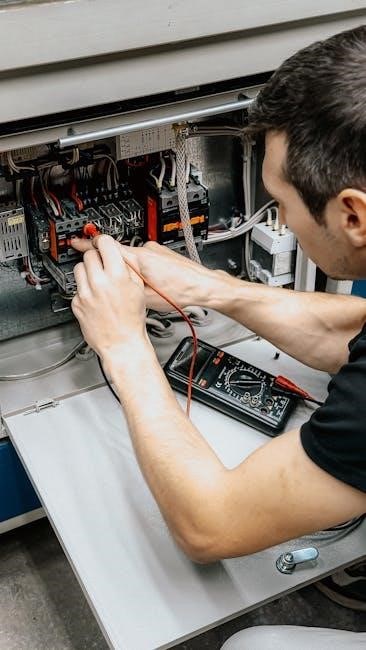
A complete absence of reading on the Simpson 260 typically indicates a break in the circuit, starting with the simplest checks. First, inspect and replace the internal fuse – a common failure point. Next, thoroughly examine the test leads for continuity; damaged or broken leads will prevent readings.
If the fuse and leads are good, the issue may lie within the meter’s internal components. A faulty range selector switch or a defective rectifier could be the cause. Consult the schematic diagram to trace the signal path and identify potential problem areas. Professional repair may be necessary for internal faults.
Incorrect Readings
Persistent inaccurate readings on the Simpson 260 suggest a calibration issue or component degradation. Begin by verifying the correct range selection; using an inappropriate range will yield errors. If the range is correct, suspect the copper oxide rectifier, as its performance diminishes with age, impacting AC voltage accuracy.
Internal resistance changes within the meter’s movement or coil assembly can also cause inaccuracies. A thorough calibration procedure, detailed in the service manual, is often required. If calibration fails, component replacement or professional repair is recommended to restore the meter’s precision.
Zeroing the Meter
Proper zeroing is crucial for accurate measurements with the Simpson 260. Before each use, and when changing ranges, adjust the zero-ohm knob until the needle aligns precisely with the leftmost zero mark on the resistance scale. This compensates for internal resistance and battery voltage fluctuations.
For DC measurements, short the test leads together and adjust the zero-ohm knob to achieve a perfect zero reading. Failure to zero the meter introduces significant errors, particularly in sensitive resistance measurements. Regularly check and readjust the zero point to maintain optimal accuracy and reliable performance.
Simpson 260 Schematics and Diagrams
Detailed schematics are essential for understanding the Simpson 260’s internal workings and facilitating repairs. This section provides access to the complete circuit schematic, illustrating all components and their interconnections. Additionally, a dedicated wiring diagram details the arrangement of internal components, aiding in troubleshooting and component replacement.
Specific attention is given to the rectifier circuit, showcasing the copper oxide rectifier’s configuration. These diagrams, often labeled with identifiers like WD-260, are invaluable for tracing signals and diagnosing faults. Accessing these resources empowers users to effectively maintain and restore their Simpson meters.
Complete Circuit Schematic
The complete circuit schematic for the Simpson 260 meticulously details every component and connection within the meter. This diagram, crucial for advanced repair and understanding, illustrates the interplay between resistors (R1, R2, R3, etc.), the rectifier, and the movement/coil assembly. It’s a complex layout, requiring careful study to trace signal paths and identify potential failure points.
Understanding this schematic allows for targeted troubleshooting, enabling users to pinpoint issues within specific circuits. The diagram’s notations, alongside component values, are vital for accurate restoration. Referencing this schematic alongside the wiring diagram provides a comprehensive view of the meter’s internal architecture.
Wiring Diagram for Internal Components
The wiring diagram for the Simpson 260 provides a visual representation of how internal components are interconnected. This diagram, distinct from the complete schematic, focuses on the physical connections between parts like the range selector switch, the copper oxide rectifier, and the meter movement. It details wire colors, terminal assignments, and component mounting locations.
Utilizing this diagram is essential when disassembling or reassembling the meter, ensuring correct wiring and preventing accidental shorts or open circuits. It complements the schematic by illustrating the physical layout, aiding in tracing connections and identifying potential wiring faults. Careful attention to detail is crucial when interpreting this diagram.
Rectifier Circuit Details
The Simpson 260 employs a copper oxide rectifier for AC voltage measurements, converting alternating current into pulsating direct current readable by the meter movement. This circuit utilizes the unique properties of copper oxide to allow current flow in only one direction. Details reveal a specific arrangement of the rectifier element within the circuit, impacting accuracy and sensitivity.
Understanding this circuit is vital for troubleshooting AC voltage readings. A faulty rectifier will result in inaccurate measurements or a complete lack of response. The circuit’s design, with approximately 1000 ohms per volt, is crucial for proper AC voltage scaling. Regular inspection of the rectifier is recommended for optimal performance.
Internal Components and Their Functions
The Simpson 260 relies on several key internal components working in harmony. The copper oxide rectifier, detailed elsewhere, converts AC to DC for voltage readings. Central to operation is the sensitive movement and coil assembly, responding to current flow to indicate measurements on the meter face.
Crucially, the range selector switch dictates which components are active for each measurement type. This switch connects the appropriate resistors and circuitry, enabling selection of voltage, current, and resistance ranges. Proper functionality of this switch is essential for accurate readings. Understanding these components aids in troubleshooting and repair efforts.
Copper Oxide Rectifier Explanation
The Simpson 260 utilizes a copper oxide rectifier for AC to DC conversion, vital for accurate AC voltage measurements. This rectifier, a crucial component, allows current flow in only one direction, effectively changing alternating current into pulsating direct current. Unlike modern semiconductor diodes, the copper oxide rectifier relies on the properties of copper oxide to achieve rectification.
Its operation involves a chemical process at the junction of copper and copper oxide. While less efficient than solid-state diodes, it was a reliable technology for its time. Understanding its function is key to diagnosing AC voltage measurement issues within the meter.
Movement and Coil Assembly
The Simpson 260’s sensitive movement is the heart of the meter, translating electrical current into a visible needle deflection. This assembly comprises a permanent magnet, a moving coil suspended within the magnetic field, and a hairspring providing restoring torque. Current flowing through the coil generates a magnetic field that interacts with the permanent magnet, causing the coil—and attached needle—to rotate.
The hairspring’s tension opposes this rotation, establishing a balance point indicating the measured value. Precise calibration relies on the integrity of this assembly; damage or misalignment significantly impacts accuracy. Careful handling is essential during any repair work involving this delicate mechanism.
Range Selector Switch Functionality
The Simpson 260’s range selector switch is crucial for adapting the meter to various measurement scenarios. It achieves this by altering the internal resistance network, effectively scaling the current flowing through the meter movement. Different positions on the switch select appropriate shunt resistors for current measurements or series resistors for voltage and resistance readings.
Proper switch operation ensures the correct range is selected, preventing overload and damage to the meter. Internal contacts within the switch must be clean and secure for accurate readings; oxidation or looseness can introduce errors. Careful rotation is advised, avoiding abrupt movements that could wear the contacts.
Calibration Procedures
Maintaining accuracy in the Simpson 260 requires periodic calibration. DC Voltage calibration involves applying known precise DC voltages and adjusting the potentiometer until the meter indicates the correct value. AC Voltage calibration utilizes a calibrated AC source, adjusting for accurate readings across all voltage ranges.
Resistance calibration demands a precision resistor; compare meter readings against the known value and adjust accordingly. Calibration should be performed by a skilled technician with appropriate equipment. Regular checks ensure continued reliability and adherence to specifications. Improper calibration can lead to inaccurate measurements and potentially unsafe conditions.
DC Voltage Calibration
DC Voltage calibration on the Simpson 260 necessitates a stable, precise DC voltage source. Begin by selecting the appropriate DC voltage range on the meter. Apply a known, accurate DC voltage – for example, 10V, 50V, or 500V – to the meter’s input terminals.
Carefully adjust the potentiometer associated with the DC voltage range until the meter reading precisely matches the applied voltage. Repeat this process for multiple voltage levels across all DC ranges. Ensure the meter movement is stable before finalizing adjustments. Proper calibration guarantees accurate DC voltage measurements, crucial for electronic troubleshooting and repair.
AC Voltage Calibration
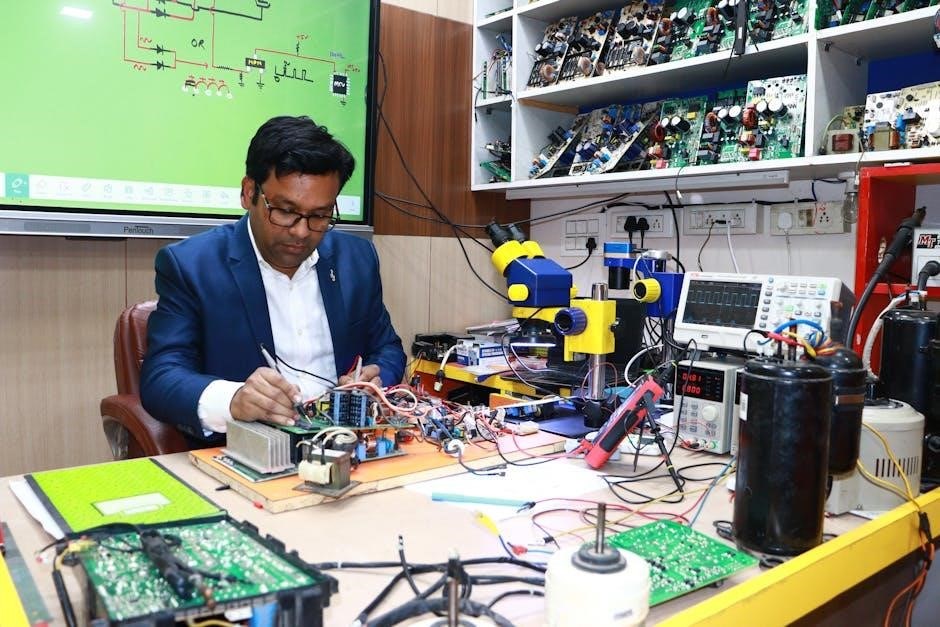
AC Voltage calibration of the Simpson 260 requires a calibrated AC voltage source. Select the desired AC voltage range on the meter. Apply a known, accurate AC voltage – such as 10V, 50V, 500V, or 1000V – to the input terminals. The Simpson 260 utilizes a copper oxide rectifier for AC measurements, influencing calibration.
Adjust the potentiometer dedicated to the selected AC range until the meter reading aligns precisely with the applied AC voltage. Repeat this procedure across all AC voltage ranges, verifying stability at each point. Accurate AC voltage calibration is vital for reliable measurements in AC circuit analysis and repair work.
Resistance Calibration
Resistance calibration on the Simpson 260 necessitates a precision resistor box. Begin by selecting the highest resistance range. Short the test leads and adjust the zero-ohm potentiometer until the meter indicates zero resistance. Then, apply known resistance values from the resistor box – for example, 10 ohms, 100 ohms, 1k ohm, and 10k ohms – to the input terminals.
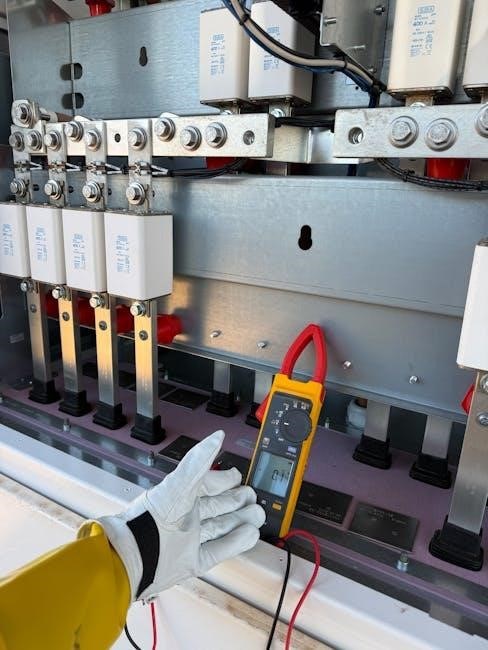
Carefully adjust the potentiometer corresponding to each resistance range until the meter reading matches the selected resistance value on the box. Repeat this process across all resistance ranges, ensuring accuracy. Proper resistance calibration guarantees precise component value measurements and circuit troubleshooting.
Resources and Further Information
For Simpson meter repair services, numerous specialized technicians cater to vintage instruments. Online forums and communities, dedicated to analog multimeters, provide invaluable troubleshooting advice and shared experiences with the Simpson 260. These platforms often host detailed discussions and user-submitted schematics.
Finding replacement parts can be challenging, but suppliers specializing in vintage electronics components often stock essential items like resistors, capacitors, and even the copper oxide rectifier. Websites dedicated to electronic components are also useful. Remember to verify compatibility before ordering. Instrument repair services may also sell parts.
Simpson Meter Repair Services
Locating qualified technicians for Simpson 260 repair requires careful consideration. Several specialists focus exclusively on vintage volt-ohm-multimeters, possessing in-depth knowledge of their unique construction and common failure points. Online searches utilizing keywords like “Simpson meter repair” or “analog multimeter repair” yield numerous options.
When selecting a service, inquire about their experience with the Simpson 260 specifically, turnaround time, and cost estimates. Reputable services will offer a detailed assessment before commencing work. Consider shipping costs and insurance when sending your meter. Instrument repair companies often provide calibration services post-repair.
Online Forums and Communities
Numerous online forums and communities cater to enthusiasts and professionals maintaining vintage test equipment, including the Simpson 260. These platforms serve as invaluable resources for troubleshooting, sharing repair tips, and sourcing hard-to-find parts. Dedicated threads often focus specifically on the Simpson line of meters.
Active participation allows users to ask questions, contribute their expertise, and access a wealth of collective knowledge. Searching archived discussions can reveal solutions to common issues. Online communities foster a collaborative environment, aiding in the preservation and continued use of these classic instruments. Sharing experiences benefits all members.

Availability of Replacement Parts
Sourcing replacement parts for the Simpson 260 can present challenges due to its age, but options remain available. Specialized electronics component suppliers often stock common items like test leads, fuses, and certain resistors. Online auction sites frequently feature used or NOS (New Old Stock) parts salvaged from decommissioned meters.
Repair services, as mentioned previously, may also sell individual components. The copper oxide rectifier, a crucial element, sometimes requires sourcing from specialized vendors. Careful searching and patience are key to locating the necessary parts to restore and maintain the functionality of this vintage multimeter. Consider joining forums for leads.