
gcse maths paper 1 2023 pdf
GCSE Maths Paper 1 2023 PDF: A Comprehensive Overview
Numerous resources became available in 2023, offering GCSE Maths Paper 1 PDFs from AQA, Edexcel, and Pearson. These materials aided student preparation,
including practice papers and revision videos. The documents detail exam specifics for June 7th, November 8th, and May 19th, supporting foundational skill development.
The 2023 GCSE Maths Paper 1 served as the initial assessment in the GCSE Mathematics qualification, designed to evaluate a student’s foundational mathematical abilities. Throughout 2023, various exam boards – AQA, Edexcel, and Pearson – administered this paper, each releasing specific versions and associated PDF documents. These PDFs became crucial resources for students preparing for their examinations, offering insights into the exam’s structure and content.
The paper primarily focused on assessing core mathematical skills, including arithmetic, algebra, geometry, and measures. A significant emphasis was placed on evaluating skills expected of students aiming for Grade 4-5, representing a solid pass and a good foundation for further study. Numerous revision materials, including practice papers and video tutorials, were created to support students in mastering these key concepts. The availability of past papers in PDF format allowed students to familiarize themselves with the question types and exam format, enhancing their confidence and preparedness. Resources like those from The GCSE Maths Tutor proved particularly valuable.
Availability of the 2023 Paper 1 PDF
Throughout 2023, accessing the GCSE Maths Paper 1 PDF was facilitated through multiple channels. Exam boards like AQA, Edexcel, and Pearson made past papers available on their respective websites, often as downloadable PDF files. Independent educational resources, such as The GCSE Maths Tutor, also compiled and distributed these PDFs, alongside supplementary materials like practice questions and revision guides. AQA’s November 2023 Paper 1 was readily available as a PDF, while Edexcel provided details for their November 8th, 2023 paper in a downloadable format.
These PDFs weren’t limited to official exam papers; many tutors and educational platforms created their own practice paper booklets, also distributed as PDFs. The ease of access to these digital documents proved invaluable for students, allowing them to practice exam conditions and review key concepts at their own pace. Furthermore, the PDF format enabled easy printing and annotation, enhancing the learning experience. The widespread availability of these resources significantly aided student preparation for the GCSE Maths Paper 1 in 2023.
Exam Board Specific Papers (AQA, Edexcel, Pearson)
AQA released its Maths Paper 1 for November 2023 as a freely downloadable PDF, alongside a corresponding text file for accessibility. This allowed students to familiarize themselves with the exam’s structure and question types specific to the AQA syllabus. Edexcel provided detailed examination information for their Level 1/Level 2 GCSE Mathematics Paper 1, scheduled for November 8th, 2023, also in PDF format. This document outlined crucial details regarding the exam’s content and format.
Pearson Edexcel International GCSE Mathematics Paper 1 details were published for the exam on June 7th, 2023, again accessible as a PDF. Each exam board’s papers reflected their unique approach to assessment, with variations in question style and emphasis on specific mathematical concepts. Students were encouraged to focus on past papers from their respective board to ensure targeted preparation. Resources like The GCSE Maths Tutor often categorized papers by exam board, simplifying the revision process. Accessing these board-specific PDFs was crucial for students aiming to maximize their performance on the GCSE Maths Paper 1 in 2023.
Key Topics Covered in Paper 1
GCSE Maths Paper 1 in 2023 heavily emphasized foundational skills, encompassing a broad range of mathematical concepts. Section A, as highlighted in available resources, focused intensely on basic arithmetic, geometry, and algebra – the cornerstones of mathematical understanding. Revision materials consistently stressed the importance of mastering these fundamentals for achieving a Grade 4-5.
Specific topics included number operations (addition, subtraction, multiplication, division), fractions, decimals, percentages, and ratio. Geometric concepts covered area, perimeter, volume, and angle properties. Algebraic skills assessed included simplifying expressions, solving equations, and working with inequalities. Numerous revision videos and practice papers concentrated on these core areas, aiming to solidify student comprehension. The emphasis on these topics reflected the exam boards’ desire to assess a student’s basic mathematical proficiency. Resources from The GCSE Maths Tutor specifically targeted these areas, providing focused practice and support. A strong grasp of these key topics was essential for success on Paper 1.
Foundational Skills Assessed (Grade 4-5 Focus)
Paper 1 in the 2023 GCSE Maths exams placed significant emphasis on assessing foundational skills, particularly those crucial for achieving a Grade 4-5. Revision resources, like those offered by The GCSE Maths Tutor, specifically targeted these areas, recognizing their importance for building a solid mathematical base. The focus was on demonstrating competency in core concepts rather than complex problem-solving.
Key skills included accurate arithmetic calculations, understanding and applying geometric properties, and manipulating basic algebraic expressions. Students were expected to confidently work with fractions, decimals, percentages, and ratios. The ability to solve simple equations and inequalities was also heavily assessed. Resources highlighted the need for students to demonstrate a clear understanding of these fundamentals, rather than relying on advanced techniques. Achieving a Grade 4-5 hinged on mastering these foundational elements, making them a central focus of preparation materials and exam content. The aim was to ensure students possessed a robust understanding of core mathematical principles.
Arithmetic and Basic Operations
Arithmetic and basic operations formed a cornerstone of the 2023 GCSE Maths Paper 1, particularly within Section A, designed to test foundational skills. Mastery of these concepts was vital for students aiming for Grade 4-5, as they underpinned more complex mathematical problems. The exam heavily featured questions involving fractions, decimals, percentages, and ratios – requiring both calculation and application in practical contexts.
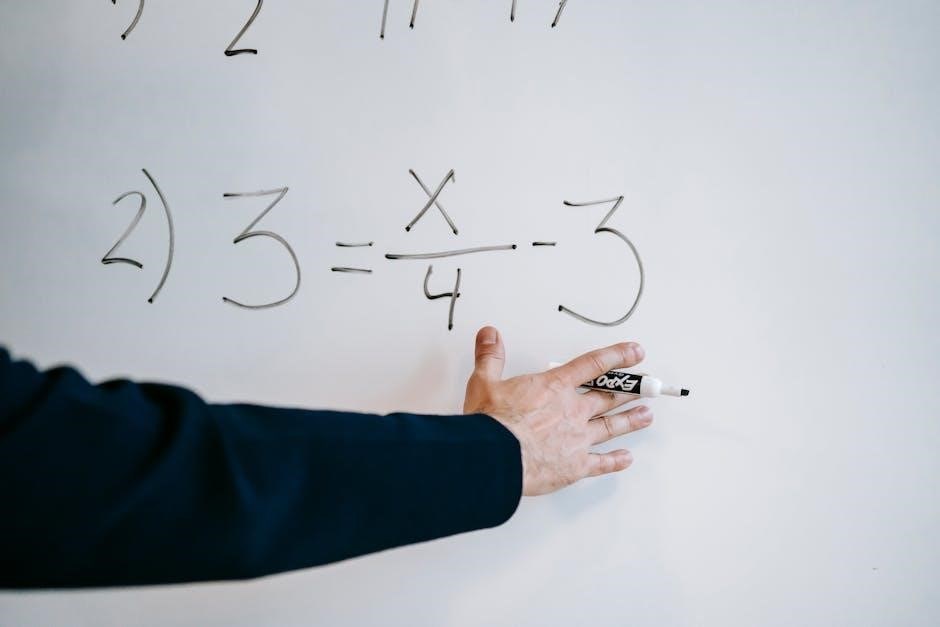
Students were expected to demonstrate fluency in all four basic operations: addition, subtraction, multiplication, and division, including with negative numbers and decimals. Understanding order of operations (BODMAS/PEMDAS) was crucial to avoid errors. Revision materials, such as those available online, emphasized practicing these skills to build speed and accuracy. The paper also tested the ability to convert between fractions, decimals, and percentages, and to apply these skills to solve real-world problems. A strong grasp of these fundamental arithmetic principles was, therefore, essential for success on Paper 1.
Geometry and Measures
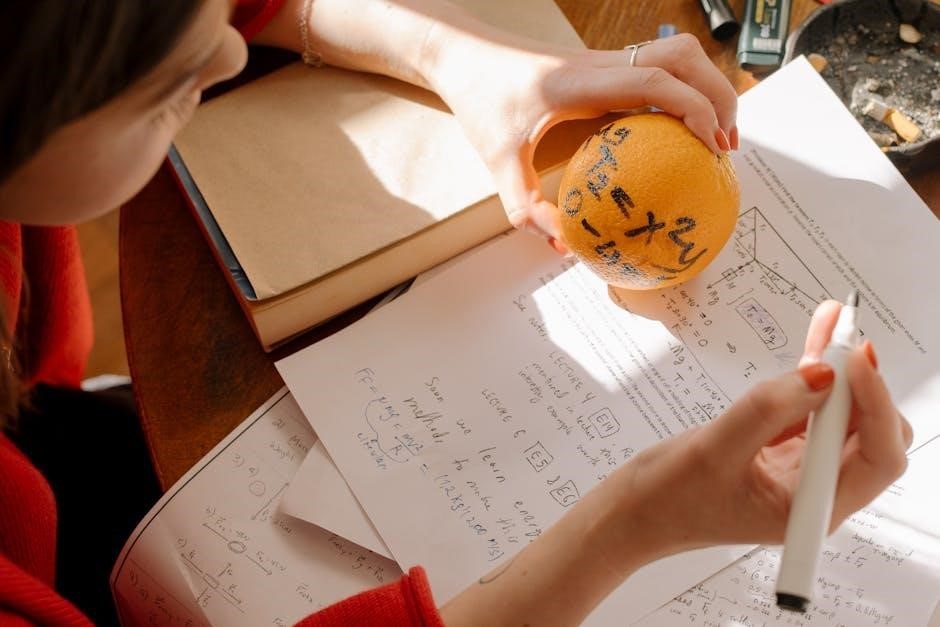
Geometry and measures constituted a significant portion of the 2023 GCSE Maths Paper 1, assessed within Section A alongside arithmetic and algebra. Students needed to demonstrate proficiency in calculating area, perimeter, and volume of various 2D and 3D shapes, including triangles, rectangles, circles, cubes, and prisms. Understanding geometric properties, such as angles in triangles and quadrilaterals, was also essential.
The paper tested students’ ability to apply geometric theorems, including Pythagoras’ theorem and trigonometric ratios (sine, cosine, tangent), to solve problems involving right-angled triangles. Furthermore, questions involved units of measurement and conversions between them – centimeters, meters, kilometers, and imperial units. Students were expected to accurately use formulas and apply their knowledge to both familiar and unfamiliar geometric scenarios. Revision resources focused on practicing these calculations and reinforcing the understanding of geometric principles, ensuring students could confidently tackle the geometry and measures section of Paper 1.
Algebraic Concepts and Techniques
Algebraic proficiency was a core component of the 2023 GCSE Maths Paper 1, heavily featured within Section A’s foundational skills assessment. Students were required to demonstrate competence in simplifying expressions, solving linear equations, and working with inequalities. The paper tested their ability to manipulate algebraic terms, factorize expressions, and expand brackets accurately.
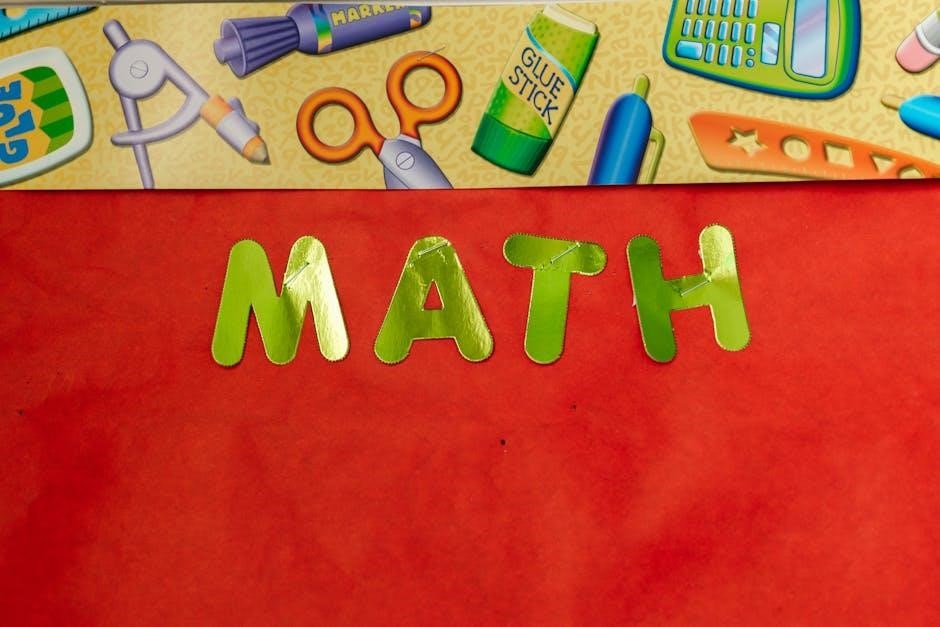
A key focus was on solving equations involving unknowns, including those requiring rearrangement and application of inverse operations. Students also encountered problems involving forming equations from worded scenarios, demanding strong problem-solving skills. Understanding and applying the rules of indices (powers) and surds were also assessed. Revision materials emphasized practicing these techniques, alongside working with algebraic fractions and quadratic equations. Mastery of these algebraic concepts and techniques was crucial for achieving a good grade on Paper 1, as they formed the basis for more complex mathematical problems.
Exam Format and Structure of Paper 1
The 2023 GCSE Maths Paper 1 followed a standardized format across exam boards like AQA, Edexcel, and Pearson, though specific details varied. Generally, the paper was designed to assess foundational mathematical skills and typically lasted around 1 hour and 30 minutes. It comprised a mix of question types, including multiple-choice, short answer, and extended response questions.

Section A specifically focused on testing basic arithmetic, geometry, and algebra – the core skills needed for a Grade 4-5. The remainder of the paper built upon these foundations, introducing more complex problems. Mark schemes were readily available as PDFs, allowing students to understand how marks were awarded. The paper’s structure aimed to progressively challenge students, starting with accessible questions and increasing in difficulty. Familiarity with this structure, gained through practice with past papers, was vital for exam success. Understanding the weighting of different topics within the paper also aided effective revision.
Section A: Foundational Skills Breakdown
Section A of the 2023 GCSE Maths Paper 1 was deliberately designed to assess core, foundational skills – the building blocks for more advanced mathematics. This section heavily emphasized basic arithmetic operations, including addition, subtraction, multiplication, and division, often applied to both whole numbers and decimals. Geometry and measures were also prominent, with questions testing understanding of shapes, area, perimeter, and volume.
Algebraic concepts formed another key component, focusing on simplifying expressions, solving basic equations (often linear), and understanding fundamental algebraic notation. The aim was to gauge a student’s grasp of these essential skills, typically targeting a Grade 4-5 standard. Success in Section A was crucial, as it provided the foundation for tackling the more challenging questions later in the paper. Numerous revision resources and practice papers specifically targeted these foundational areas, helping students build confidence and proficiency before the exam.
Revision Resources and Practice Papers
A wealth of revision resources and practice papers were readily available to students preparing for the 2023 GCSE Maths Paper 1. The GCSE Maths Tutor offered downloadable booklets specifically designed as predicted papers, aiming to mirror the exam’s style and difficulty. AQA provided official past papers, allowing students to familiarize themselves with the exam board’s specific question formats and marking schemes.
Pearson Edexcel also released past papers and detailed examination information for their November 2023 and June 2023 assessments. Furthermore, numerous online platforms hosted revision videos covering fundamental topics essential for achieving a Grade 4-5. These resources focused on arithmetic, geometry, and algebra, providing targeted support for foundational skills. Utilizing a combination of past papers, predicted papers, and focused revision videos proved a highly effective strategy for students aiming to maximize their performance on Paper 1.

The GCSE Maths Tutor Resources
The GCSE Maths Tutor emerged as a significant provider of resources for students tackling the 2023 GCSE Maths Paper 1. They released a “final predicted paper” in June 2023, available as a downloadable booklet, intended to simulate the actual exam experience. This resource aimed to help students gauge their preparedness and identify areas needing further revision.

Beyond the predicted paper, The GCSE Maths Tutor offered a range of supplementary materials. These included paper-specific revision videos, catering to both Foundation and Higher tiers, and focusing on content relevant to the May 19th exam. Access to additional perks and resources was available through channel membership. The platform’s commitment to providing targeted practice and revision materials proved invaluable to many students preparing for the challenging GCSE Maths Paper 1, offering a focused approach to exam preparation and skill development.
Exam Dates and Schedules (June 7th, November 8th, May 19th)
Throughout 2023, students faced multiple opportunities to sit the GCSE Maths Paper 1, with key exam dates strategically scheduled to accommodate various learning paces and resit needs. Pearson Edexcel administered exams on June 7th and November 8th, 2023, providing crucial assessment points for students following that syllabus. Detailed examination information was released prior to each date, outlining the paper’s structure and content focus.
Furthermore, a specific exam date of May 19th was highlighted in relation to revision resources, particularly those offered by The GCSE Maths Tutor. This suggests a concentrated effort to support students preparing for that particular sitting. Access to past papers and mark schemes was vital for preparation across all dates. Understanding these schedules allowed students to effectively plan their revision, ensuring they were adequately prepared for the challenges presented by GCSE Maths Paper 1, regardless of when they chose to take the exam.
Understanding the HBB Gene (Related Medical Context)
While seemingly unrelated to GCSE Maths Paper 1 in 2023, the HBB gene – Hemoglobin subunit beta – represents a significant area of biological study. This gene is crucial as it provides the instructions for creating the beta-chain of hemoglobin, the protein in red blood cells responsible for oxygen transport. Research into the HBB gene is particularly vital due to its connection with hemoglobin-related diseases, most notably β-thalassemia.
Recent advancements include the development of Hbb-bsamp; Hbb-bt DKO mice as models for β-thalassemia, a global public health concern stemming from defects in beta-globin chain synthesis. These models allow scientists to investigate the disease’s mechanisms and potential therapies. Understanding the HBB gene’s function and associated mutations is paramount in medical research. Though distant from mathematical concepts, the HBB gene exemplifies the complex biological systems students may encounter in broader scientific contexts, highlighting the interconnectedness of various disciplines.
Hydraulic Brake Boost (HBB) Systems (Unrelated Automotive Context)
Completely diverging from the focus on GCSE Maths Paper 1 in 2023, Hydraulic Brake Boost (HBB) systems represent an interesting facet of automotive engineering. These systems are designed to enhance braking performance by utilizing hydraulic pressure to amplify the force applied by the driver. Recent inquiries have surfaced regarding the operational principles of HBB, particularly in vehicles where its presence is suspected but detailed information is scarce.
Understanding HBB requires delving into the intricacies of vehicle braking systems. While traditional systems rely solely on driver input, HBB adds a hydraulic component to provide additional assistance. This can lead to improved stopping distances and enhanced control, especially during emergency braking situations. The specifics of HBB implementation can vary between manufacturers, making a comprehensive understanding challenging without detailed technical documentation. Despite its complexity, HBB remains a crucial safety feature in modern vehicles, showcasing the application of physics and engineering principles outside the realm of mathematics education.
β-Thalassemia Models (Hbb-bsamp; Hbb-bt DKO Mice)

Shifting focus entirely away from the GCSE Maths Paper 1 2023 PDF, research into β-thalassemia utilizes animal models, specifically Hbb-bsamp; Hbb-bt DKO mice, to understand this genetic blood disorder. β-thalassemia arises from defects in the HBB gene, which encodes the beta-globin chain of hemoglobin – essential for oxygen transport. These DKO (double knockout) mice lack functional beta-globin, mirroring the human condition.
The development and availability of these models, recently highlighted as “newly available,” are crucial for investigating disease mechanisms and testing potential therapies. The HBB gene’s role is central; its mutations cause reduced or absent beta-globin production, leading to anemia. Researchers utilize these mice to study the consequences of this deficiency and evaluate interventions aimed at restoring hemoglobin function. This biomedical research, while unrelated to mathematics assessments, demonstrates the practical implications of genetic understanding and the importance of model organisms in disease research, offering a contrasting scientific perspective.
Accessing Past Papers and Mark Schemes
For effective preparation utilizing the 2023 GCSE Maths Paper 1 PDF and beyond, accessing past papers and corresponding mark schemes is paramount. Several online platforms offer these resources, facilitating targeted revision. AQA provides downloadable PDFs of their November 2023 Paper 1, available as both PDF and text files. Similarly, Pearson Edexcel offers exam details for their November 8th, 2023, paper, and for the International GCSE Mathematics exam taken on June 7th, 2023.
These resources aren’t merely for practice; analyzing mark schemes reveals the expected depth of answers and the criteria used for assessment. The GCSE Maths Tutor also provides a wealth of materials, including predicted papers and revision booklets. Utilizing these past papers allows students to familiarize themselves with the exam format, question types, and time constraints, ultimately boosting confidence and maximizing performance on the actual GCSE Maths Paper 1 examination. Consistent practice with mark scheme analysis is key to success.
Preparing for Paper 1: A Final Checklist
As the GCSE Maths Paper 1 exam approaches, a systematic final checklist is crucial for optimal preparation. First, ensure you’ve reviewed key topics covered, focusing on foundational skills assessed for Grade 4-5 achievement. Utilize available 2023 PDF resources from AQA, Edexcel, and Pearson to practice with authentic exam questions.
Next, dedicate time to revising arithmetic, geometry, and algebraic concepts – Section A heavily emphasizes these areas. The GCSE Maths Tutor’s revision videos and predicted papers are invaluable tools. Don’t neglect past papers; actively analyze mark schemes to understand examiner expectations. Confirm your understanding of the exam format and structure.
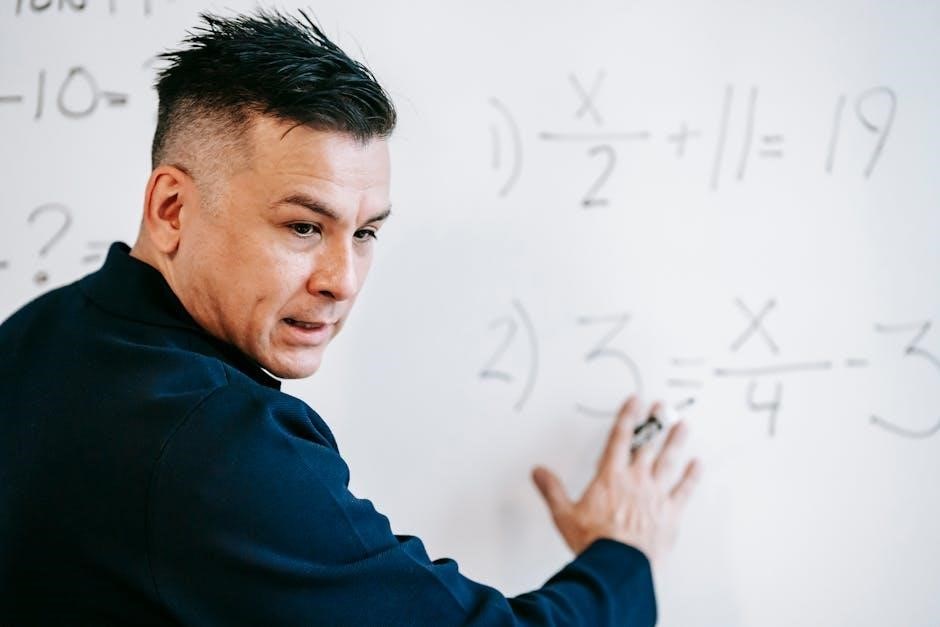
Finally, prioritize rest and a calm mindset. Gather necessary materials (calculator, pens, ruler) the night before. Review key formulas, but avoid last-minute cramming. A well-structured approach, combined with consistent practice using available 2023 resources, will maximize your potential on Paper 1.